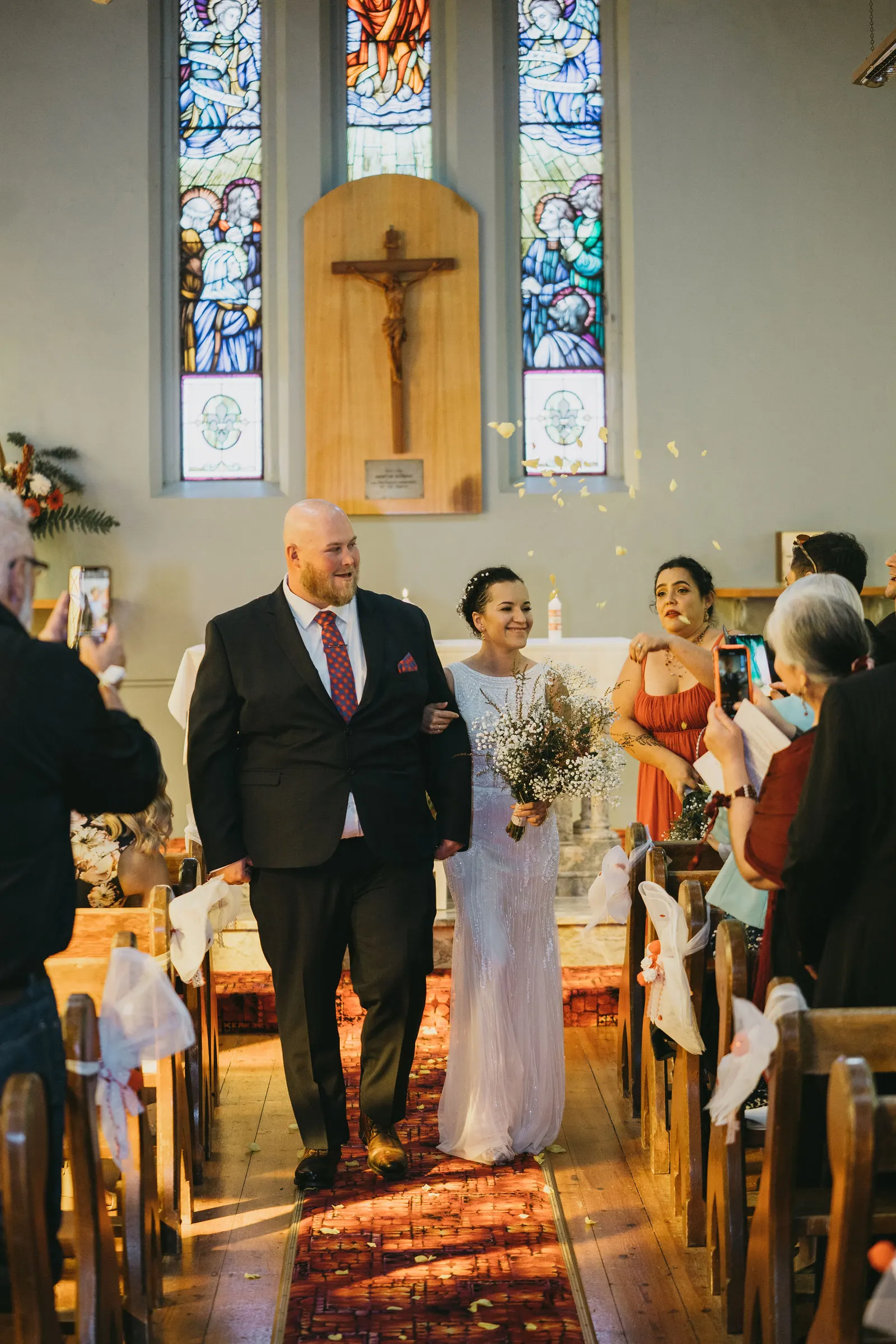
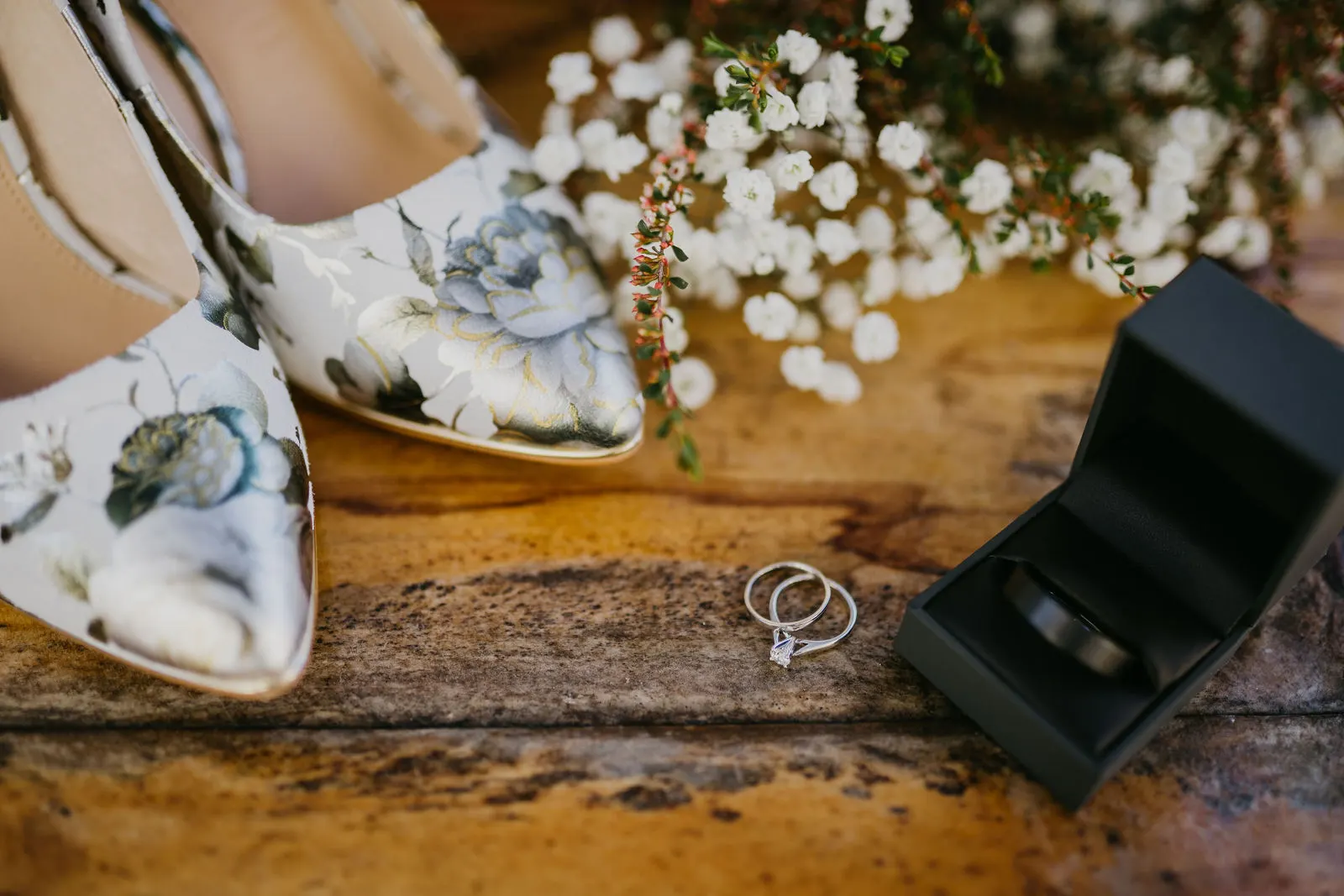
St Peter’s Church sits in Clarke’s Hill, central Victoria, which places it firmly in country wedding territory. The building is heritage stone, which means the light that comes through the windows is refracted in ways that photograph beautifully — not theatrical, just clean and consistent. The ceremony space is traditional: pews, altar, aisle, all the architectural elements that read clearly in photos and give structure to the moment.
The space
St Peter’s is a mid-nineteenth-century country church built in stone, with the classical ecclesiastical layout: long nave, raised altar, stained glass at key positions, timber pews. The building’s proportions are intimate — capacity is 80 to 150 depending on configuration — which means a wedding ceremony here doesn’t feel lost in a vast empty space. Guests are close to the action, the acoustics are warm without being echoey, and the photographic compositions read tightly without being cramped.
The exterior is set into the rural landscape of Clarke’s Hill, just south of Daylesford and Dean. The grounds around the church are modest — a small lawn, mature trees, the low stone wall that defines the property — but they provide enough open ground for portraits immediately after the ceremony if the weather cooperates.
Light through the day
Church ceremonies have their own pacing, and the light at St Peter’s reflects that. The stained-glass windows on the eastern and southern aspects let coloured shafts of light into the nave from morning through early afternoon. By 2:00pm, the light through these windows is at its strongest and most directional — which is why mid-afternoon ceremonies at this church are particularly photogenic.
The interior light is consistent because you’re indoors, but it changes character through the day. Morning is cooler and softer; afternoon is warmer and more directional. For a 2:00pm ceremony, you get the full effect of stained-glass light during the vows. For a 4:00pm ceremony, you get warmer interior light and faster-fading exterior light — which means portraits immediately after the ceremony need to move efficiently.
What changes is how close the couple stands relative to the light source, how the guests’ expressions read in the half-light, whether the stone walls are catching the right angle of natural light. St Peter’s provides all of that without requiring any tricks — it’s built in a way that works for photography.
Photographing in church light
Country church interiors have a specific photographic challenge: the contrast between bright stained-glass windows and the relatively dim stone interior is high. A camera meters for one or the other. For wedding photography, this means working with available light at sensible ISO and exposure compensation, occasionally using subtle fill flash for guest reaction shots, and choosing compositions that either use the windows as backlight or as a side-light rather than fighting them.
The flash policy at St Peter’s, like most country churches, generally permits restrained flash use during the ceremony. Most photographers minimise this — natural light reads more honest, and the church’s own light is good enough that you don’t need to fight it.
Portrait locations
Immediately around the church, portrait options are limited but functional:
- The stone façade and entrance porch — for traditional wedding-day portraits with classical architecture
- The grounds and tree line — for tighter intimate portraits with depth
- The road and surrounding rural landscape — for environmental portraits showing the church in its setting
For a longer portrait session, the surrounding Clarke’s Hill, Dean, and Ballarat-region landscape provides extensive variety: paddock, treelined back roads, the kind of central Victorian rural character that photographs well. Plan a 15-to-20-minute drive to a separate landscape location if you want substantial post-ceremony portrait variety.
Weather plans
The church itself is the wet-weather plan — ceremonies happen indoors regardless of conditions, so weather doesn’t disrupt the vows. The challenge is portrait time afterward. Heavy rain pushes portraits inside the church (which is photographically workable but limited), into a covered area, or to a separate location with shelter. The reception venue, often Dean Hall ten minutes away, generally has covered indoor portrait possibilities.
Winter at this altitude in central Victoria can be cold and damp. Schedule extra time for guest movement and bring layers.
Logistics
The drive from Melbourne is about 90 minutes via the Western Highway. Most weddings here see at least some guests staying locally — Daylesford, Ballarat, or Creswick all offer accommodation within 20 minutes — and many couples coordinate group bookings.
Parking on the church grounds and surrounding road is generally adequate; coordinate with the celebrant or the church’s contact about specific arrangements for your wedding date.
Most weddings at St Peter’s pair the ceremony with a reception at a separate venue. Common pairings include Dean Hall (10 minutes), Daylesford venues (20 minutes), or Ballarat-region reception spaces. The two-venue structure is part of the day’s character — you’re moving from the formality of a country church to the warmth of a reception, and each space does one thing well.
For broader regional context, see the Ballarat wedding photographer page or the Daylesford wedding photographer page.
Who books here
Couples who choose St Peter’s tend to have a personal connection to the church — a family member married here, they grew up in the parish, the building means something specific. The wedding is often a country wedding by choice rather than convenience, and the day reflects that: smaller guest counts, multi-venue logistics, more relaxed pacing than a Melbourne CBD wedding.
The full-day photography timeline (8 to 10 hours) suits a country wedding because there’s typically more travel between locations and more landscape to photograph. For context on what an 8-to-10-hour day looks like, see the photography timeline guide.
Photographing here
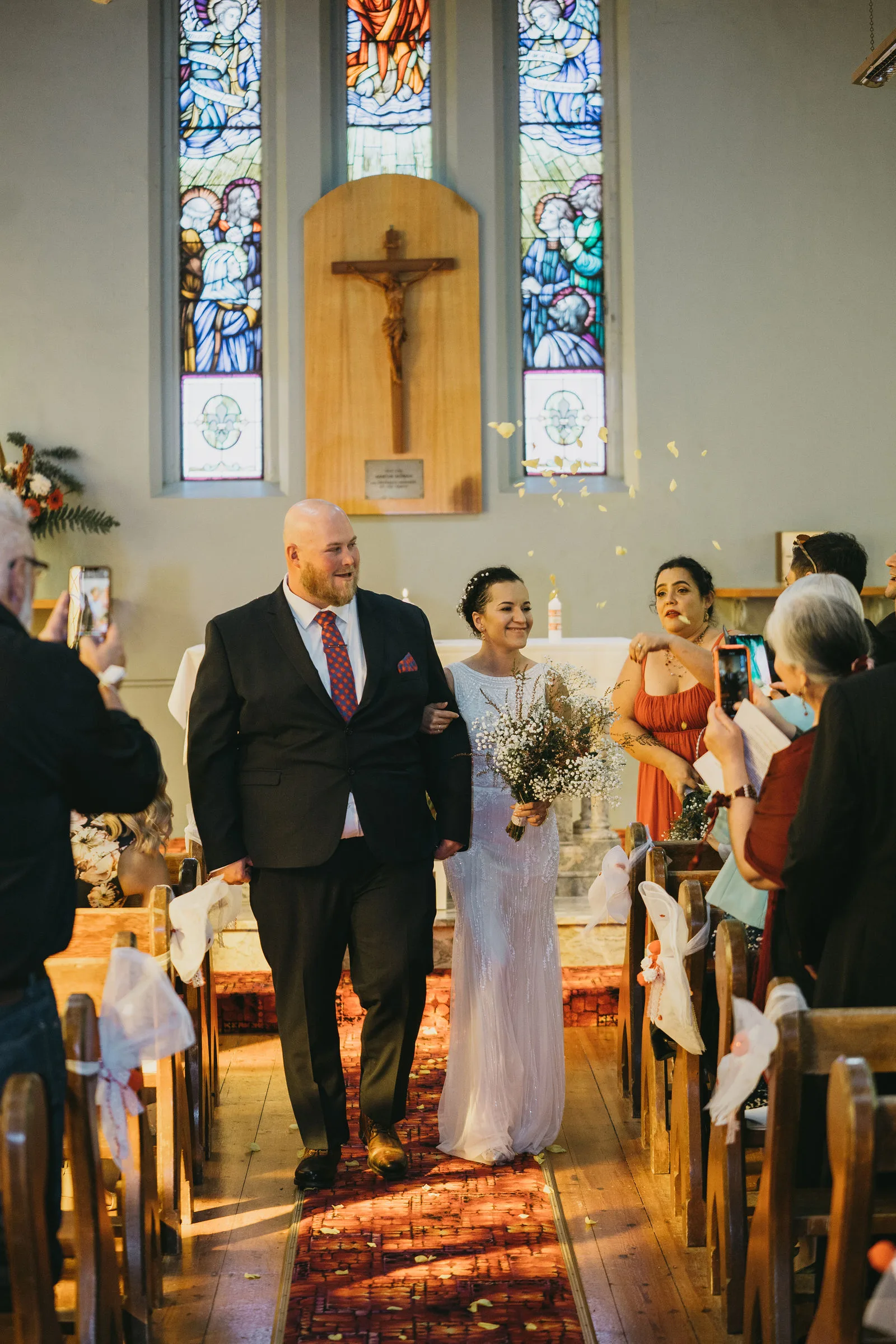
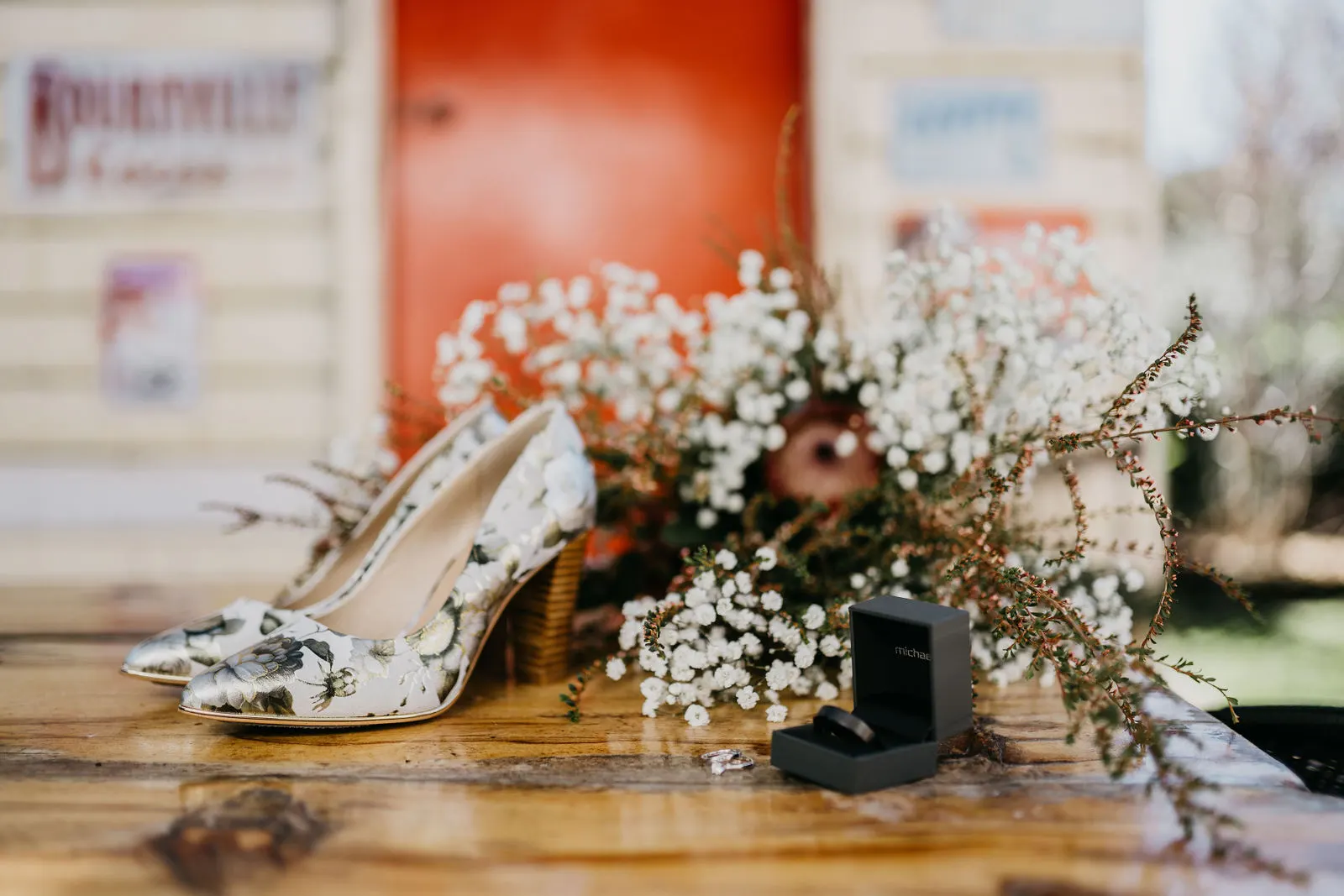
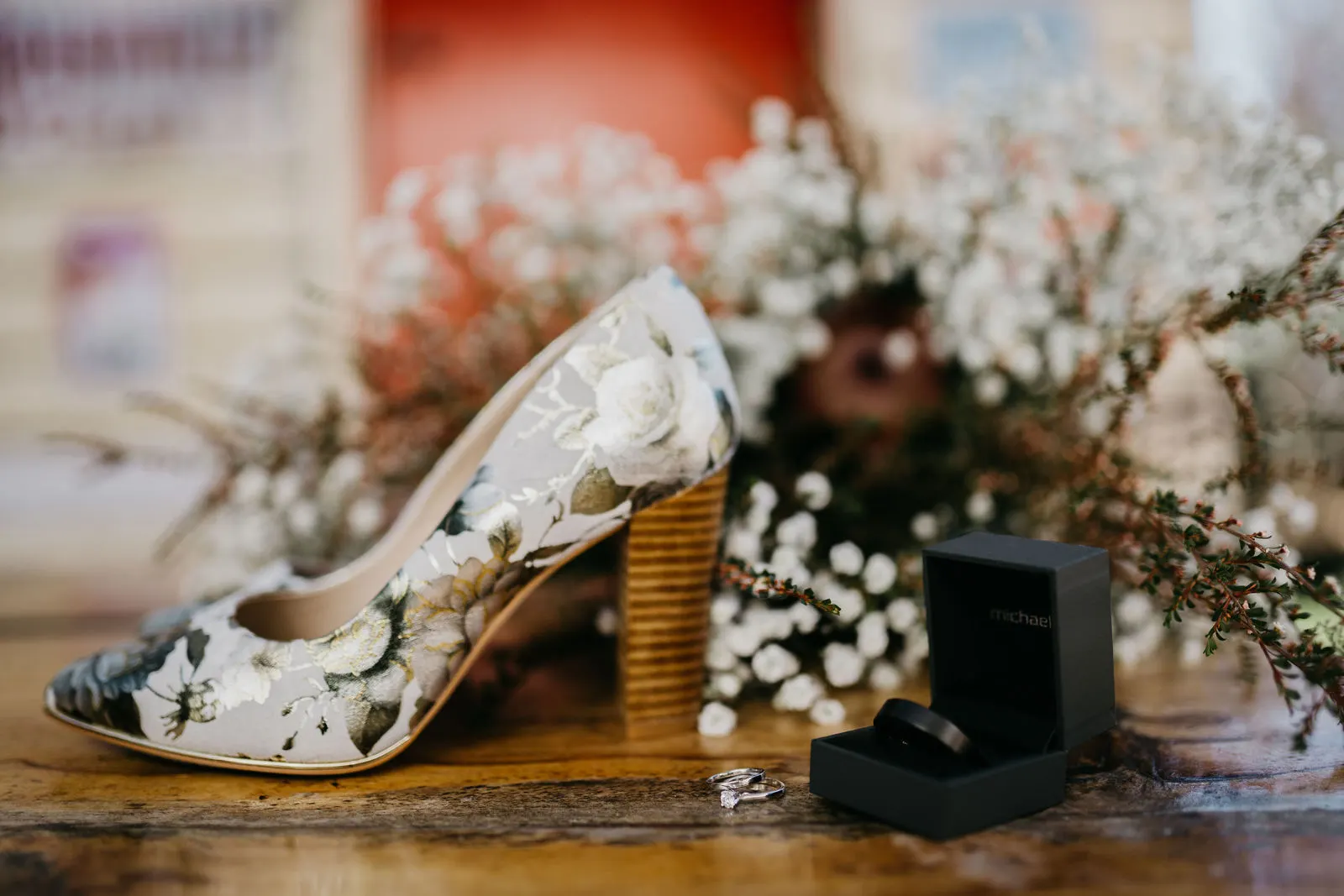
Olivia and Lee’s wedding was a Saturday country ceremony at St Peter’s, with the stained-glass light at its strongest during the vows. The couple chose a 2:00pm ceremony specifically for this — the photographs through the ceremony reflect how that light reads when it’s working. Reception followed at Dean Hall; portraits happened in between, using both the church grounds and the surrounding rural landscape for variety.
Practical tips
- Schedule the ceremony for 2:00–3:00pm in summer, 1:00–2:00pm in winter
- Confirm the church’s flash and photography policy with the celebrant in advance
- Plan a 20-minute portrait window after the ceremony for grounds-based portraits
- Build in a 15-minute drive to a separate landscape location for environmental portraits
- Confirm guest accommodation early — local options are good but limited on peak weekends
- Vendors based in Melbourne or Ballarat will both travel; Ballarat-based suppliers are sometimes a better fit logistically
For couples weighing how a country wedding day actually unfolds and what photography coverage it needs, the coverage hours guide walks through the options.
If you’re considering St Peter’s Church for your wedding photography and want to talk through ceremony timing, light planning, and full-day country coverage, get in touch. Travel to central Victoria is included in full-day collections — see the pricing page for collection details and inclusions.