Walk into any wedding photography portfolio and you’ll see terms that sound like wine tasting notes: documentary, editorial, fine art, traditional, photojournalistic. It’s a lot, and honestly, some photographers use these words differently than others.
Here’s the thing: most of these overlap. But understanding the differences helps you figure out what you actually want. So let’s break it down without the pretension.
Documentary / Photojournalistic
These terms are basically the same thing.
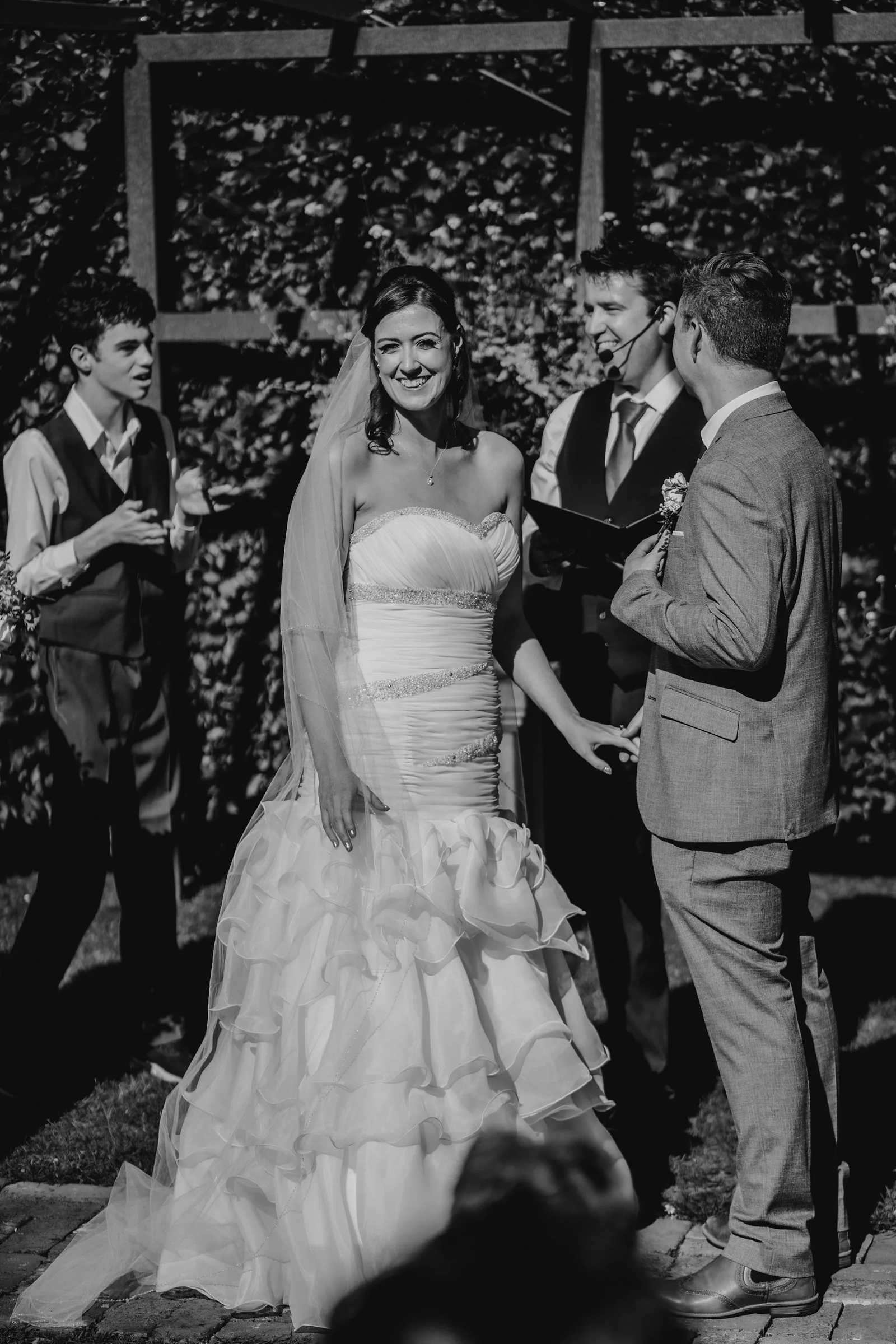
What it is: The photographer captures moments as they happen. No posing, no art direction, no staging. You’re living your day and the photographer’s documenting it.
The approach: I’m watching, waiting, anticipating. I see your mate about to tell a joke and position myself for when they laugh. I notice your parent getting emotional during the ceremony and I’m ready. I’m present but invisible.
What you get: A gallery that tells the story of your day. Genuine reactions, real moments, the actual feeling of being there. Lots of images (often 500+) because I’m shooting continuously.
The pros:
- Real, authentic moments
- Comprehensive coverage of the day
- You’re not constantly aware of the camera
- Feels natural and lived-in
The cons:
- You might miss specific family combinations if the moment never happens naturally
- Huge gallery can feel overwhelming when choosing album photos
- If you want lots of posed couple photos, this isn’t it
- Some people feel “unguarded” looking back at unposed images
Best for: Couples who want the real feeling of their day, who are comfortable being themselves in front of a camera, who prefer moments over perfection.
Traditional
What it is: The photographer directs the moments. You’re arranged, positioned, given direction.
The approach: I have a shot list. First look, couple together, couple with parents, couple with wedding party, various family combinations. We allocate time for each, I position you and the people involved, and I direct the moment: “Hold hands and walk toward me,” “Look at each other,” “Everyone smile for the camera.”
What you get: Clear, composed images. Every family configuration documented. A structured, organised gallery. 80–150 images, carefully chosen.
The pros:
- You know exactly what you’re getting (family formals are documented)
- Fewer images to sort through
- Very clear structure
- No surprises—everyone will be in the photos they expect to be in
The cons:
- You’re constantly stopping to pose for photos
- Less of the genuine in-between moments
- Can feel stiff or formal even when done beautifully
- If a moment isn’t on the shot list, it won’t be captured
Best for: Couples who want coverage of every family combination, who feel more confident when the moment is structured, who prefer a smaller, curated gallery.
Editorial
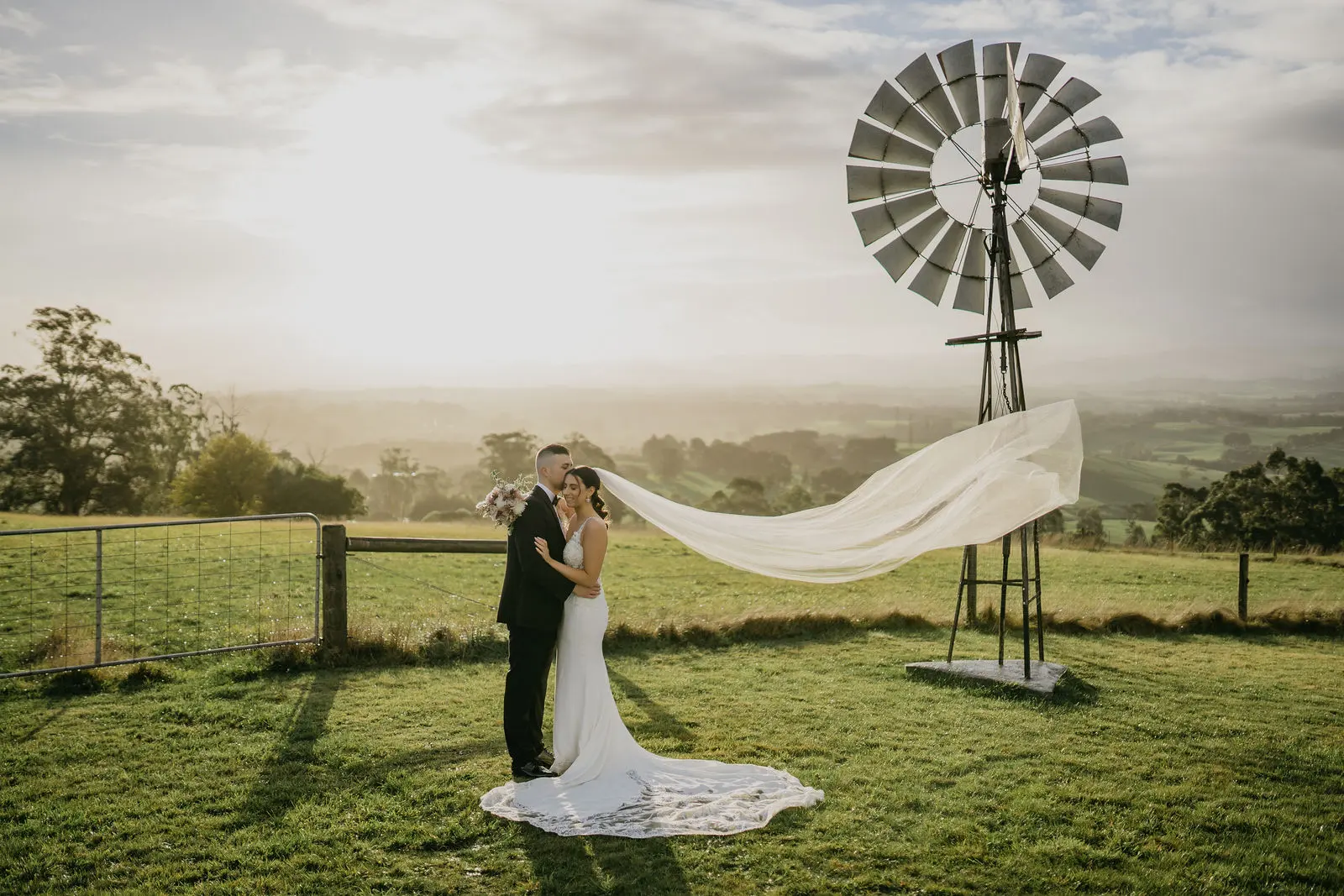
What it is: It’s somewhere between documentary and fine art. The photographer is capturing moments but also styling and composing them more deliberately.
The approach: I’m looking for moments, but I’m also thinking about light, composition, and visual storytelling. If the light is harsh, I might move you. If the background is distracting, I might adjust the frame. I’m not directing you heavily, but I’m being intentional about the visual.
What you get: Beautiful, composed moments that still feel real. More deliberate lighting and framing than documentary, but less direction than traditional. Medium-sized gallery (250–400 images).
The pros:
- Feels natural but looks polished
- Good balance of documentary and direction
- Deliberate about light and composition without being stiff
- Works for both moments and thoughtful couple portraits
The cons:
- Requires good rapport between photographer and couple (the photographer needs to read what feels natural vs. directed)
- Can feel neither-here-nor-there if not done well
- Sitting between two stools means it’s riskier if the photographer isn’t skilled
Best for: Couples who want the feeling of documentary but appreciate beautiful composition, who want moments that look both natural and intentional.
Fine Art / Artistic
What it is: The photographer is making aesthetic choices. Colour, composition, mood, lighting—these are all deliberate. It’s less about documenting the day and more about creating images that are beautiful objects.
The approach: I might ask you to move to follow light. I might skip a moment because the light isn’t right. I’m thinking about mood and mood-setting. I might shoot in black and white, or emphasize shadows and contrast, or push certain colour grades.
What you get: Stunning images. Very composed. Sometimes less coverage of every moment because I’m being selective about what’s worth capturing.
The pros:
- The images are genuinely beautiful to look at
- Cohesive aesthetic throughout the gallery
- Works brilliantly for album making and wall art
- Very distinctive look
The cons:
- You might miss moments because the photographer was waiting for better light
- The aesthetic might date (trendy moods don’t age well)
- Requires a lot of trust that the photographer’s vision aligns with yours
- Fewer images overall
Best for: Couples who are into visual aesthetics, who want images to be wall-worthy, who trust the photographer’s eye, who care more about beauty than comprehensiveness.
Comparison: The Real Difference
Let me show you how these would play out in the same moment.
A parent getting emotional during the ceremony:
Documentary: I’m positioned to catch the genuine emotion. Unguarded, real, maybe tear-streaked. The image shows what actually happened.
Traditional: This moment probably isn’t on the shot list, so I might miss it. If I do catch it, it’s somewhat incidental to the formal images I’m there to capture.
Editorial: I’m watching for it, positioned in anticipation. I catch it, but I’ve also thought about the light and angle. It’s real but composed.
Fine Art: I’m waiting for the light to hit their face just right. If it doesn’t, I might reposition. The image is raw emotion but also beautifully lit.
Hybrid Approaches
Most photographers do hybrid approaches. I shoot documentary-style—capturing moments as they happen—but I’m also deliberate about couple portraits and making sure key moments are actually captured.
My approach: Documentary with essential formals. I’m present and capturing the day as it unfolds, but I’m also making sure we get couple portraits and a couple of family photos. You get the full story without feeling like you’re constantly stopping for posed photos.
This is probably 70% documentary, 30% intentional direction.
How to Figure Out What You Actually Want
Look at galleries and notice how you feel.
Does looking at documentary images make you feel like you’re there? Do you love the spontaneity or does it feel chaotic?
Do traditional/formal images feel safe and clear, or do they feel stiff and boring?
Do editorial images feel like the sweet spot, or do they feel neither-here-nor-there?
Do fine art images blow your mind or do they feel a bit precious?
Ask yourself these questions:
Are you most comfortable posed or candid? If you freeze when the camera’s on you, documentary works better. If you feel safer when directed, traditional works better.
How important is it that every person is photographed? If you need every family combination documented, traditional is safer. If you’re cool with missing some combinations but getting genuine moments, documentary is fine.
What will you do with the photos? Album-making? Wall art? Instagram? Different styles serve different purposes. Fine art is gorgeous for prints. Documentary is great for story albums.
How much control do you want? If you want to direct your own day and not think about the camera, documentary. If you want clear structure and know exactly what you’re getting, traditional.
Do you care about the photographer’s aesthetic? If you love their style and want it applied to your day, fine art works. If you want honest coverage of your day without a heavy filter, documentary works.
What Not to Worry About
Don’t get too caught up in the terminology. What matters is:
- Can you see yourself in the photographer’s work?
- Do their images make you feel something?
- Are they actually skilled at what they claim to do?
A brilliant documentary photographer with a good eye will deliver better images than a mediocre fine art photographer with trendy presets. Skill and aesthetic alignment matter more than the label.
Real Talk
Most couples are happier with photographers who do a bit of everything—documentary skills with intentional couple portrait time, enough direction to feel supported but not so much that you feel stiff, aesthetic awareness without a heavy filter.
The best approach is the one that matches how you want to experience your day. If you want to forget about the camera and be present, documentary works. If you want clear structure and predictable outcomes, traditional works. If you want beautiful moments that feel natural, editorial or hybrid works.
And honestly? Ask the photographer directly: “Show me a full wedding day. What’s on the shot list? How much direction do you give? What moments are you waiting for versus creating?”
You’ll get a clearer picture than any term ever gives you.
Related reading
- Documentary vs traditional wedding photography
- How to choose a wedding photographer in Melbourne
- What to expect from your wedding day photographer
- Recent wedding stories
- About my approach
Want to chat about your day and what approach would actually work for you? I’ll walk you through how I work and what you can expect.