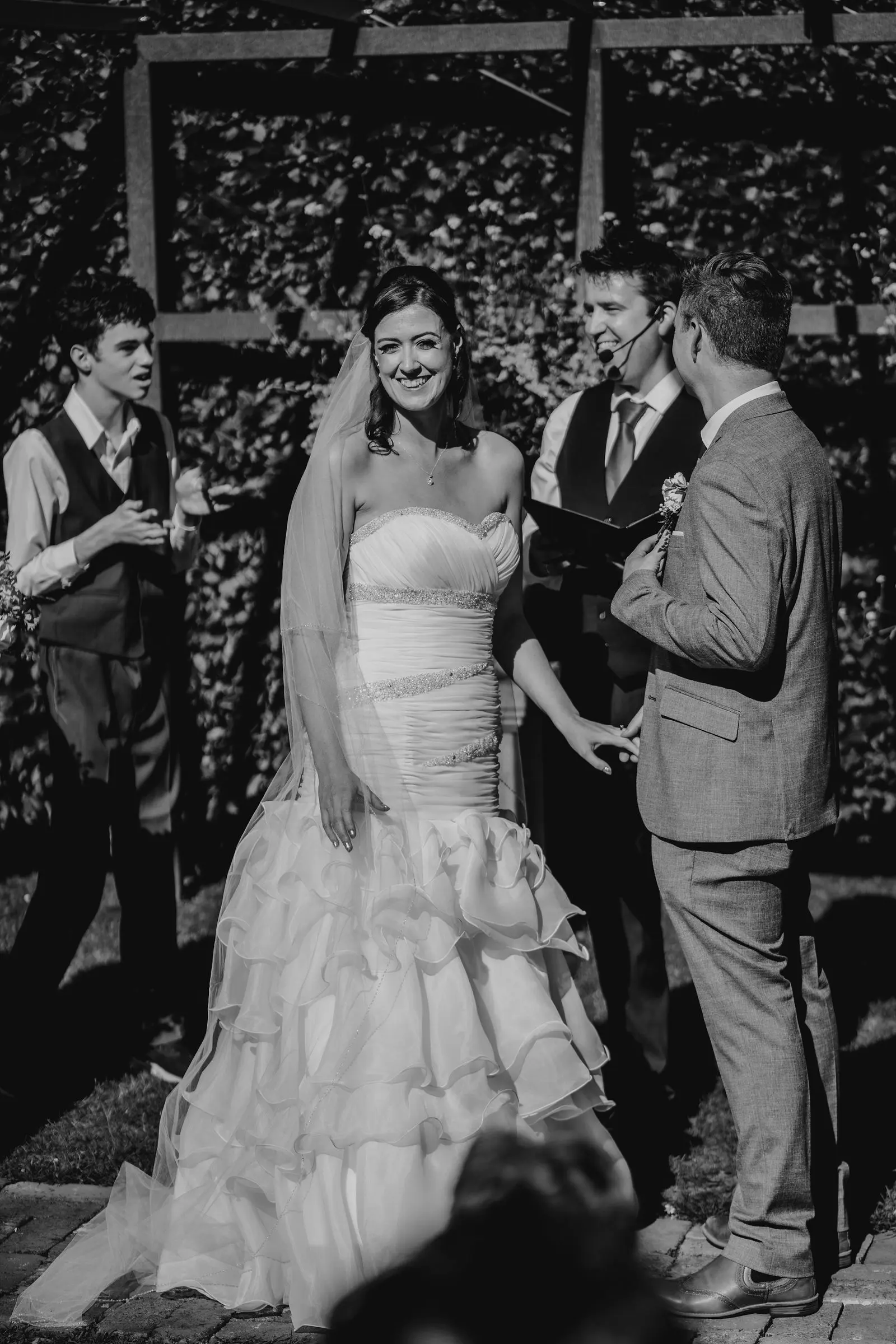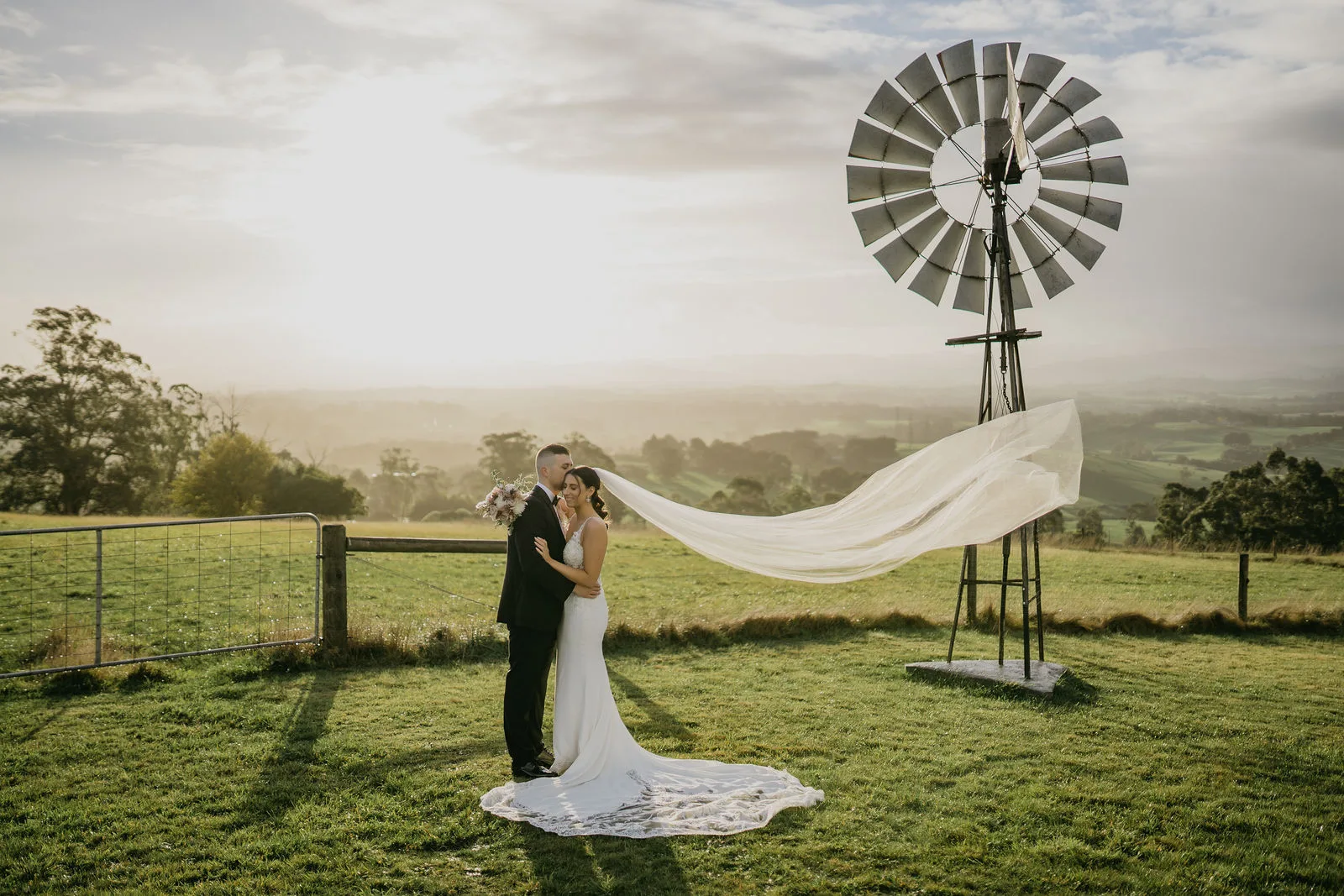
It seems like every photographer claims to be “documentary” these days. And traditional gets a bit of a bad rap online—which isn’t really fair. Let’s break down what each actually means and why it matters for your day.
Traditional Wedding Photography
Traditional means posed. Structured. You’re directing the moment.
The photographer makes a shot list: couple together, couple with parents, couple with wedding party, group shots, family configurations. People get arranged, you get the signal to smile, and click—there’s the photo.
Formals usually happen in a dedicated window, often right after the ceremony or during cocktail hour. Twenty to forty minutes for maybe 40-60 composed images.
Traditional doesn’t mean stiff, necessarily. Modern traditional photographers are thoughtful—nice light, natural expressions, genuine reactions. But the moment is orchestrated.
What Traditional Does Well
You get the essential photos. Every family configuration documented, everyone looking at the camera, properly framed. There’s clarity and order.
It’s efficient. Takes 30 minutes instead of 2 hours. If you’re on a tight timeline, that matters.
It’s what your parents expect. Not a downside—some couples genuinely want those formal family photos. There’s value in that.
It’s structurally organised. Your gallery has a clear flow: prep, ceremony, formals, reception, dancing.
The Trade-Off
You miss the in-between moments. The glance between ceremony and formals. Your mate’s genuine laugh during the speech. The moment you realised your parent was crying.
Your gallery might have 100 “proper” photos but miss 50 moments that actually made your day feel like your day.
Documentary Wedding Photography
Documentary means capturing what’s happening, not directing it.
A documentary photographer is present but invisible. They’re watching for moments—the laugh that doesn’t come on command, the hand-hold during a stressful moment, the dad getting emotional, the sister mouthing “you look amazing.”
There are still some directed moments (first dance, cake cutting), but most of the day unfolds naturally.
You end up with a lot of images (500-700 is common) because the photographer is actively shooting for the entire day, not just in designated “photo times.”
What Documentary Does Well
It captures the real feeling of the day. Not the posed version—the actual experience. How it felt in the moment, not how it looked to the camera.
You get more moments. Way more. Which means more options when choosing albums, more nuance in your story.
It doesn’t interrupt the day. You’re not constantly gathering people for photos. The photographer is there, but they’re not the centre of attention.
It prioritises candids over safety shots. You get the genuine moment more than the “everyone smile for the camera” version.
The Trade-Off
You might not get every family combination. If your photographer misses a particular moment, it’s gone—they’re not directing it, so second chances don’t exist.
Your gallery is bigger, which means more sorting and more choice (which some people find overwhelming).
And—be honest here—some people genuinely prefer the feeling of posing. They feel more confident in front of the camera when it’s structured. That’s valid.
Real Examples
Maria & Joel, Yarra Valley: Documentary approach.
- No formal shot list. Instead, photographer was present throughout the day capturing reactions.
- Ceremony: authentic expressions, the moment they kissed, guests reacting.
- Reception: genuine laughter during speeches, Maria’s mum getting emotional, Joel’s best mate roasting him.
- Dancing: the progression of the evening, moments between slow songs, actual expressions not “look at the camera.”
- Result: 620 images, gallery feels like a lived experience. It’s less “every person and combination we know” and more “here’s what happened on our day.” They loved that.
Traditional approach (if they’d done it that way):
- 3:30pm: ceremony
- 4:00pm: immediate couple photos (15 min)
- 4:15pm: wedding party photos
- 4:30pm: family combinations (15-20 people in various configurations, 20 min)
- 4:50pm: done, photographer leaves for cocktail hour
- Reception: get the first dance and cake cutting
- Result: 80-100 images, cover all the formal bases, clean structure.
Both would have value. The choice changes what story you’re telling.
Hybrid Approach
Many photographers (including me) do a bit of both.
You get some structure: first look, couple portraits, maybe one or two family shots if you really want them. But the bulk of the day is documentary—present, watching, capturing as it happens.
This covers your bases while prioritising the real moments. You’re not doing 45 minutes of formal photos, but you’re not missing essential family shots either.
So Which One Should You Choose?
Go traditional if:
- You want every family combination documented. (If you need four aunts with the couple, a formal structure is more reliable.)
- You like having a clear photo schedule. You know exactly when you’ll be “on.”
- You prefer posed photos. Some people genuinely feel more confident when the moment is structured.
- Your day is very short (4-5 hours). Better to get what you can in a structured way.
- Your venue is tricky for candid moments (dark, small spaces, lots of movement).
Go documentary if:
- You want the realness of the day captured. Reactions matter more than composition.
- You like the idea of the photographer disappearing. You want to move through your day naturally.
- You’d rather have 600 good images than 100 perfectly posed ones.
- Your day has moments that happen naturally and beautifully without direction.
- You’re more interested in story than in coverage.
Go hybrid if:
- You want some structure but mostly natural moments.
- You want a few formal family shots but don’t need every combination.
- You want the best of both approaches without committing fully to either.
What to Ask a Photographer About Their Approach
“Show me a full wedding gallery and tell me what was directed vs. captured naturally.” You’ll see their actual ratio immediately.
“What’s your shot list?” Documentarians often don’t have a formal one. Traditional photographers will have a comprehensive list.
“If there’s a family photo I really want, how will you make sure to get it?” This reveals if they can adapt. A good photographer can do documentary-style shooting but capture your essential moments.
“What happens during cocktail hour?” Documentarians are usually shooting. Traditional photographers might step back.
The Honest Truth
Your photographer’s skill matters more than the approach. A brilliant traditional photographer captures genuine expressions even in posed moments. A brilliant documentary photographer finds moments and frames them beautifully.
A mediocre one of either approach will leave you disappointed.
The style is almost secondary to the photographer’s actual talent and ability to see the moment.
What matters is that you choose someone whose approach aligns with how you want to experience your day. If you love the structured feeling of posing for photos, go traditional. If you want to move naturally and have that captured, go documentary.
And if you’re unsure, ask to see full galleries from both approaches. You’ll quickly feel which one resonates.
For what it’s worth, my approach is documentary with essential formals. I capture the day as it happens—the genuine moments, the real reactions—but I make sure we get couple portraits and a few key family moments. You get the full story of your day without feeling like you’re constantly stopping for photos.
But that’s my preference, not a judgment on other approaches. The best choice is the one that matches how you want to feel on the day.
Related reading
- Wedding photography styles explained
- How to choose a wedding photographer in Melbourne
- What to expect from your wedding day photographer
- Recent wedding stories
- About my approach
Let’s chat about what your day might look like and which approach would actually work best for you.